Temperature
Temperatures were below normal in the majority of the region. The lowest temperatures were 20°F to 25°F below normal in northcentral North Dakota. The highest temperatures were in southeastern and southwestern Wyoming, and scattered parts of central and western Colorado reaching 5°F to 10°F above normal.
Temperatures were above normal in most of the western portion of the region, with northwestern and southcentral Colorado reaching 10°F to 15°F above normal. The hottest temperature was 42°F in Grand Junction, Colorado, which is 3°F above normal for the area, and Alamosa, Colorado, which is 6°F above normal for the area. The lowest temperatures were 20°F to 25°F below normal in eastern North Dakota.
Temperatures in northcentral and southwestern North Dakota, and northwestern South Dakota reached 20°F to 25°F below normal. The coldest temperature was -16°F in Williston, North Dakota, which is 16°F below normal for the area. The highest temperatures were 15°F to 20°F above normal in southeastern Wyoming.

| 
| 
|
Precipitation
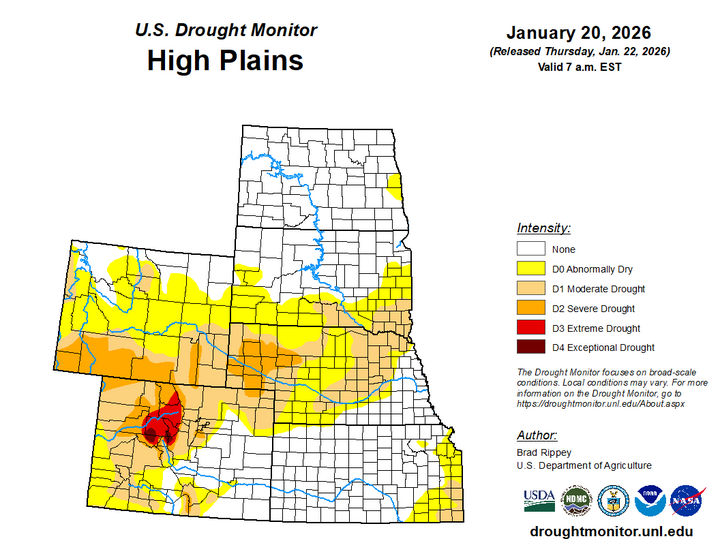
Precipitation amounts varied in the region, ranging from 2 percent of normal in southeastern and northwestern Colorado, western and scattered parts of northern and southeastern Wyoming, northern Nebraska, across southern and central South Dakota, and scattered parts of central and eastern North Dakota, to 800 percent of normal in northwestern South Dakota, and southwestern South Dakota. Fredonia, Kansas received 6 inches of precipitation; most of it fell on the 25th. Drought continues in the region. D0 (abnormally dry) conditions increased from 50 percent to 51 percent. In the region, Wyoming experienced the highest increase in D0 conditions by 5 percent while Colorado experienced the highest decrease in D0 conditions by a little less than 1 percent.

| 
|