Temperature
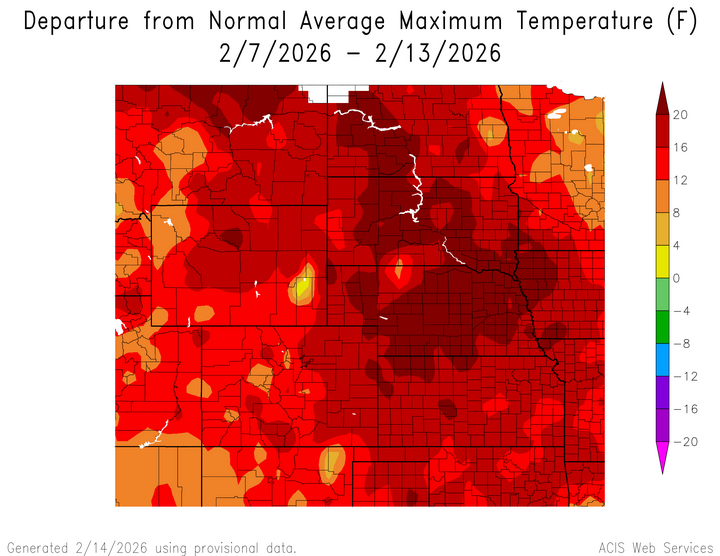
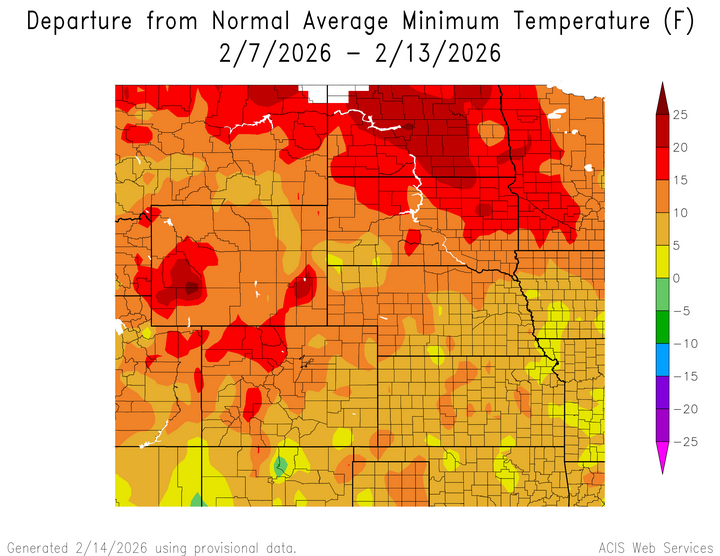
Temperatures were above normal throughout the region. The highest temperatures were greater than 20°F above normal across central and northwestern North Dakota, northcentral South Dakota, and southwestern Wyoming. The lowest temperatures were 0°F to 4°F above normal in small areas of southeastern Colorado.
Temperatures in central and western North Dakota, across central and southern South Dakota, throughout most of Nebraska, central and northern Kansas, and northcentral Wyoming reached values greater than 20°F above normal. The hottest temperature was 62°F in Topeka, Kansas, which is 18°F above normal for the area, Salina, Kansas, which was 17°F above normal for the area, and Wichita, Kansas, which is 14°F above normal. The lowest temperatures were 0°F to 4°F above normal in southeastern Wyoming.
Temperatures in southcentral and southeastern Colorado, parts of southcentral, northcentral and northeastern Kansas, scattered parts of southcentral, southeastern, and northwestern Nebraska, and southwestern South Dakota reached 0°F to 5°F above normal. The coldest temperature was 15°F in Alamosa, Colorado, which is 9°F above normal for the area. The highest temperatures reached values greater than 25°F above normal in central North Dakota, and western Wyoming.

| 
| 
|
Precipitation
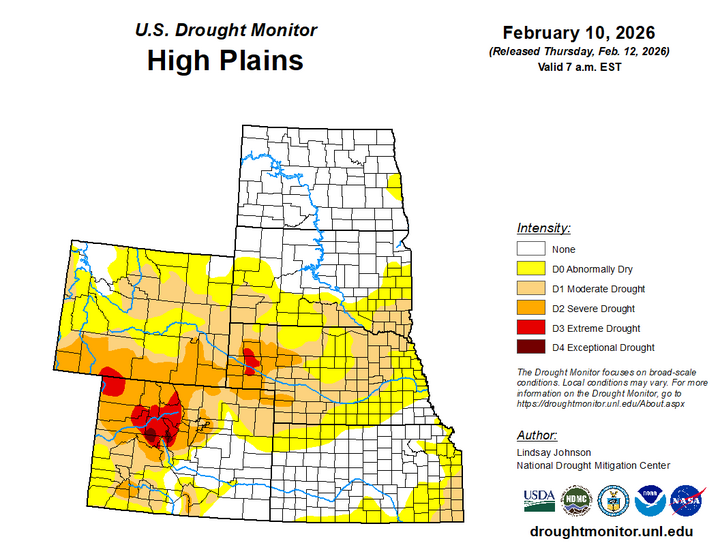
Precipitation amounts varied in the region, ranging from 2 percent of normal in the majority of Kansas, Nebraska, South Dakota, and North Dakota along with parts of central and eastern Wyoming, and central and eastern Colorado to 200-400% of normal in northwestern Colorado, southwestern Wyoming, and southwestern North Dakota. The Lewis Lake in Wyoming received 2.6 inches of precipitation; most of it fell on the 9th. Drought continues in the region. D0 (abnormally dry) conditions increased from 56 percent to 60 percent. In the region, Nebraska experienced the highest increase in D0 conditions by 13 percent while North Dakota and South Dakota experienced no change in D0 conditions.

| 
|